

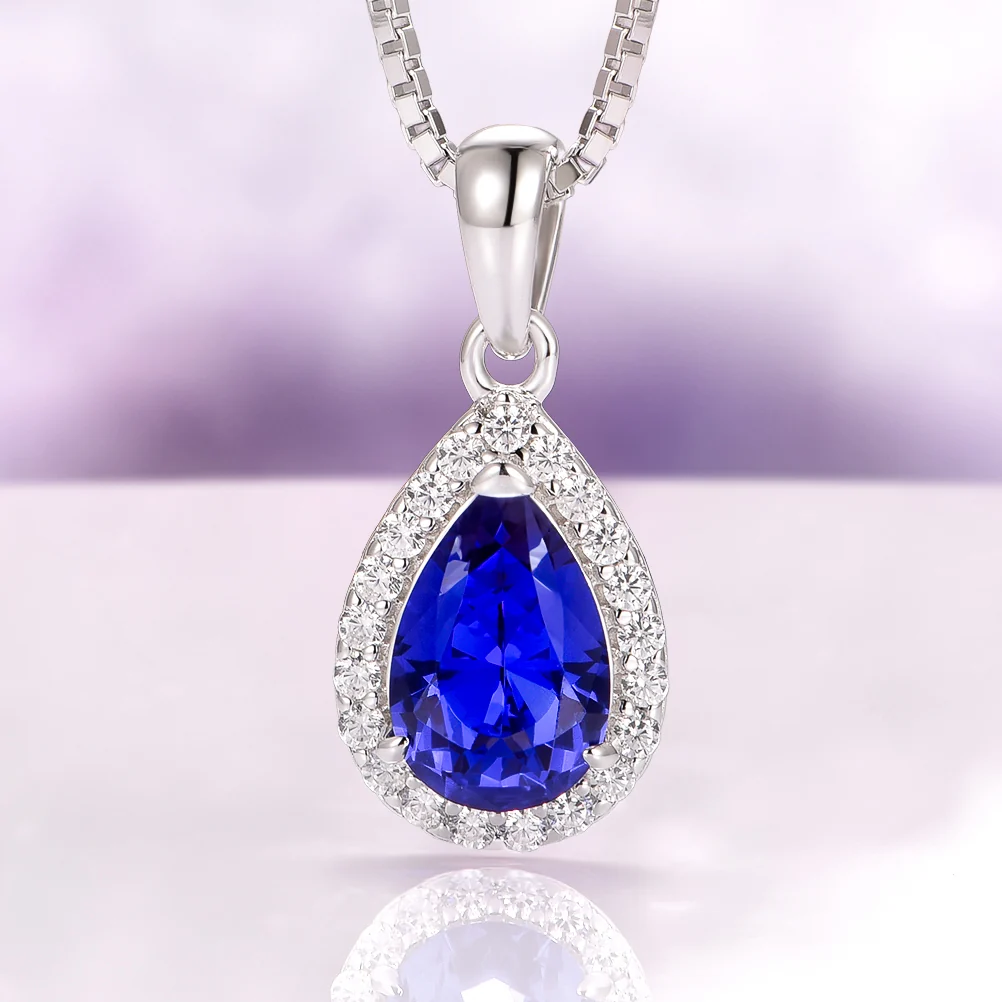
Few stones carry a room the way a sapphire does. Its cool blue reads as calm and considered rather than loud, which is exactly why a sapphire necklace tends to become the piece a person reaches for again and again. Worn at the throat, the color sits close to the face and picks up whatever light is around it, shifting from ink to sky as you move. The trick to wearing one well is not owning something rare or extravagant. It is understanding a handful of simple relationships: stone to neckline, chain to collar, necklace to earrings. Once those click into place, a single pendant can quietly do the work of a whole jewelry wardrobe.
Choosing a pendant size and shape
Start with scale, because scale is what most people get wrong. A pendant should feel proportional to your frame and to the amount of open skin above your neckline. A petite stone can vanish against a broad collarbone, while an oversized drop can overwhelm a narrow one. Hold a piece up in a mirror before you decide anything else and notice whether your eye goes to the stone or straight past it. As for shape, each cut sends a different signal. A round or oval sapphire feels classic and endlessly wearable. A teardrop or pear leans elegant and draws the eye downward, which flatters most necklines. Emerald and cushion cuts read more architectural and vintage. There is no single correct answer, only the shape that matches how often you want to wear it and how much attention you want it to ask for.
Chain length and necklines
Length is the quiet decision that changes everything. A shorter chain sits high and works with open collars and crew necks, while a longer one drops toward the sternum and pairs naturally with deeper V-necks and layered looks. The general rule is to let the pendant land in the open space of the neckline rather than fighting the fabric edge. If you are unsure where a given length will actually fall, a guide to necklace lengths is worth reading before you commit, since the difference of an inch or two can move a stone from flattering to awkward. Turtlenecks and boat necks invite something longer that rests on the knit; scoop and sweetheart necklines are happiest with a pendant that echoes their curve.
Solitaire, station, and tennis styles
Beyond the single pendant, three broad styles cover most sapphire necklaces, and knowing the difference helps you shop with intent. A solitaire is one stone on a chain, the most versatile option and the easiest to dress up or down. A station necklace spaces several smaller sapphires at intervals along the chain, giving a rhythm of color that catches light as you move without ever feeling heavy. A line style, sometimes called a tennis necklace, sets stones edge to edge in a continuous ribbon for a far more formal, high-shine effect. Consider what you already own and where the gap is:
- A solitaire if you want one piece that goes everywhere.
- A station style if you like subtle sparkle for daily wear.
- A line style if you dress for events and want real presence.
Layering with other pieces
Layering is where a sapphire necklace stops being an accessory and starts being a signature. The reliable approach is to vary length and weight so each piece has its own lane: a short delicate chain up high, your sapphire pendant in the middle, and a longer strand below. Keep one piece as the clear focal point, usually the colored stone, and let the others stay quiet so the arrangement reads as intentional rather than crowded. Mixing metals is entirely acceptable now and often looks richer than matching everything, though it helps to repeat a metal at least once so the eye finds a thread to follow. When in doubt, subtract a strand. Negative space around a sapphire is what lets the color breathe.
From day to evening
The same sapphire necklace can carry two completely different moods with almost no effort. By day, worn against a knit or a crisp shirt, a pendant reads as understated polish, the kind of detail a colleague notices without quite naming. Come evening, the identical piece against bare skin or a dark neckline turns into a focal point, its blue deepened by lower light. To shift a look upward, let the neckline drop, clear away competing necklaces so the sapphire stands alone, and echo the stone somewhere else, perhaps a matching earring. To bring it back down for daytime, layer it into a casual stack and let it blend. One good necklace styled two ways is far more useful than two you rarely touch, which is a large part of why sapphire earns its keep. If you are still building a foundation, it helps to explore the sapphire collection and see how different cuts and settings behave before deciding what suits your routine.
Matching a necklace to earrings
Pairing a sapphire necklace with earrings is less about identical matching and more about intentional balance. A common instinct is to buy a perfectly matched set, but a set can read a touch formal or dated when worn all at once. A softer, more modern approach is to coordinate rather than clone: pick up the same stone color in a different form, such as a pendant with small sapphire studs, or repeat the metal while letting the shapes differ. Scale matters here too. If the necklace is the statement, keep earrings restrained so the two do not compete. If you favor bold earrings, let the necklace recede to a simple chain. The goal is a conversation between the pieces, not an echo, and that quiet coordination almost always looks more considered than a head-to-toe set.
Caring for color and shine
A sapphire necklace rewards a little routine attention, and none of it is complicated. Put the necklace on last, after fragrance, lotion, and hairspray have settled, so residue does not collect around the setting and dull the stone. Store each piece separately, ideally flat and untangled, so chains do not knot and stones do not knock against one another. A soft cloth after wear keeps the metal bright and the sapphire clear, and an occasional gentle clean with mild soap and warm water restores the depth of color that daily life slowly films over. Handled this way, a single well-chosen necklace stays looking considered for years and remains the piece you reach for without thinking.
The takeaway: a sapphire necklace works because of relationships, not rarity. Get the scale right for your frame, let the chain length suit your neckline, choose a style that fills a real gap in what you own, and coordinate earrings rather than matching them exactly. Do that, and one thoughtful piece of blue will quietly outwork half your jewelry box.
