

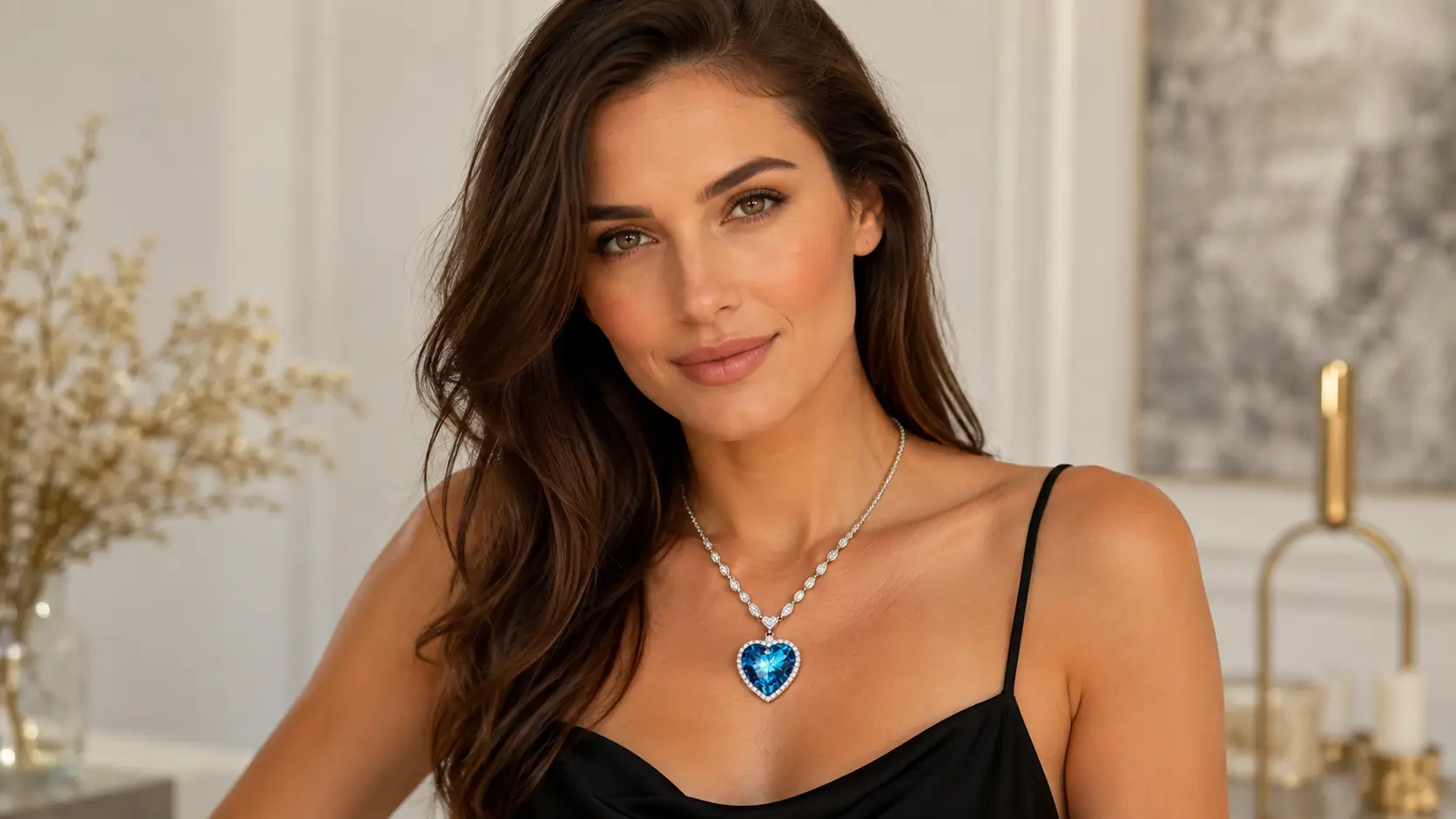
A blue heart necklace does not behave like a neutral piece of jewellery. It brings colour close to the face, catches the light and usually becomes the first detail people notice. That can make it seem difficult to style, particularly when the pendant has a strong shape or a deep, saturated shade of blue.
In practice, it is surprisingly versatile. The secret is not to build an entire outfit around the necklace. It is to give the pendant enough space to stand out, while keeping the rest of the look calm and intentional.
The same necklace can work with a daytime blouse, a simple knit, a black evening dress or a more romantic outfit. Small changes in neckline, colour and accompanying jewellery make a bigger difference than buying a completely different piece for every occasion.
Start with the neckline
The neckline determines where the pendant sits visually. A necklace may look elegant with one top and slightly crowded with another, even when the colours are identical.
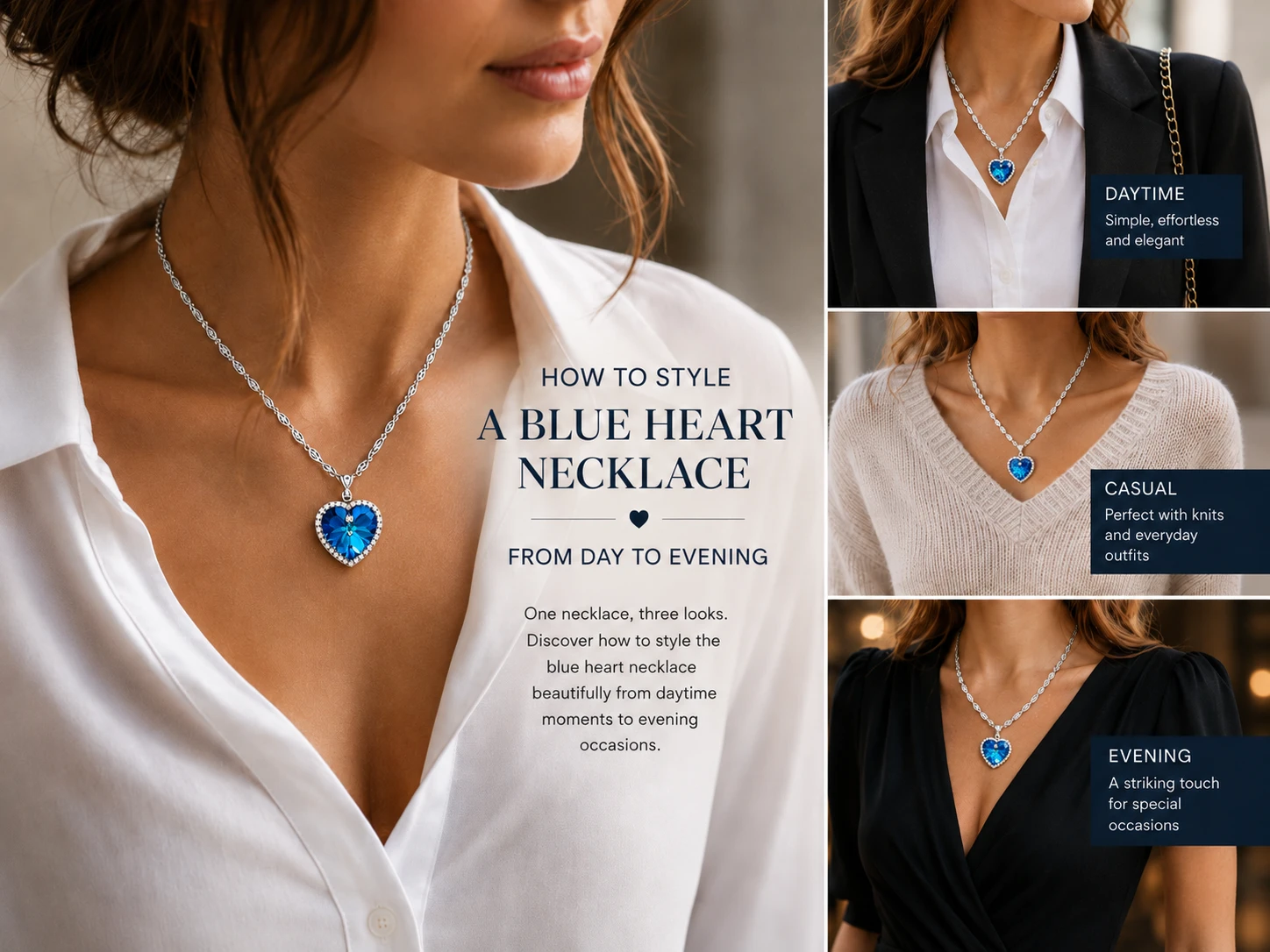
Open necklines are the easiest place to begin. A V-neck naturally follows the direction of a heart-shaped pendant, while a scoop neck creates a softer frame around it. A simple square neckline also works well because the curves of the heart contrast with the straighter shape of the clothing.
With a buttoned shirt, leaving one or two buttons open gives the pendant room without making the outfit feel overly formal. The necklace should sit inside the open area rather than across the collar itself.
High necklines need a different approach. A fine chain and a clearly defined pendant can look striking over a plain roll-neck or fitted knit, particularly in black, cream or navy. Avoid busy prints in this case. When the necklace sits directly on fabric, both the colour and the shape become more prominent.
Let blue be the main accent
One of the easiest mistakes is trying to match a blue pendant with several other blue accessories. Perfect coordination can quickly make an outfit feel staged.
Instead, treat the necklace as the main coloured element. Neutral shades give it space to work:
- black creates the strongest contrast and makes the crystal appear brighter;
- white and ivory give the look a lighter, more romantic quality;
- grey keeps the outfit understated while allowing the blue to remain visible;
- navy creates a tonal effect that feels polished rather than dramatic;
- soft beige and champagne tones add warmth around a cool blue stone.
Denim also pairs naturally with blue jewellery. The shades do not need to match. In fact, a deeper crystal often looks better against faded or mid-wash denim because there is enough contrast to separate the pendant from the outfit.
How to wear it during the day
For daytime, the necklace works best when the rest of the jewellery is restrained. A blue heart pendant already has a recognisable shape and a clear focal point. It rarely needs large earrings or several competing necklaces.
Try it with a white shirt, straight-leg jeans and a simple blazer. The necklace adds personality without making the outfit feel dressed for an evening event. It also works with a fine knit, tailored trousers and low heels for a softer office look.
On more casual days, a plain T-shirt can be enough. Choose one with a neckline that leaves the pendant visible, then keep the rest simple. The contrast between an everyday top and a more expressive piece of jewellery often makes the necklace feel more wearable.
If the pendant is inspired by a famous cinematic jewel, there is no need to make the entire outfit theatrical. The reference can remain subtle. To most people, it will simply look like a striking blue heart necklace.
Moving from afternoon to evening
A necklace with a deep blue stone becomes more dramatic under evening lighting. Facets that appear bright and clear during the day may show darker flashes indoors, while the surrounding stones catch artificial light more sharply.
This means the necklace can transform an otherwise simple outfit. A black dress with a clean neckline is the most obvious choice, but it is not the only one. Deep green, charcoal, silver-grey and midnight blue can all work beautifully.
For dinner or a formal event, consider pulling the hair away from the neckline. A low bun, a loose twist or hair tucked behind the shoulders keeps the pendant visible and prevents the chain from becoming tangled.
If the dress already includes sequins, heavy embroidery or a detailed collar, the necklace may have to compete for attention. In that situation, either choose a simpler outfit or allow the pendant to be the only decorative element near the face.
Choose earrings that support the look
The safest choice is a small stud or a delicate drop earring. Clear stones, simple silver-toned pieces or very small blue accents will complement the necklace without repeating its shape too literally.
Matching heart earrings can create a coordinated set, but the result is more themed and less understated. That may be perfect for a romantic occasion or a gift set, while separate shapes tend to feel easier for everyday wear.
Large statement earrings are not automatically wrong, but they change the balance of the outfit. If both the pendant and the earrings are bold, keep the clothing exceptionally simple and avoid adding several bracelets or rings with large stones.
Layering requires a light touch
Heart pendants usually look best when they remain the lowest and most visible necklace in a layered arrangement. A very fine, shorter chain can sit above it, provided the two pieces do not overlap.
Spacing matters more than the number of necklaces. Two chains that constantly fall into each other can look untidy and may scratch the pendant. A shorter necklace should sit clearly above the heart, leaving a visible gap.
For a detailed pendant, one additional chain is generally enough. Layering three or four necklaces may hide the heart shape and turn the neckline into a collection of competing lines.
Keep the look elegant rather than costume-like
A piece associated with a famous film can easily become part of a themed outfit, but it does not have to feel like a costume accessory. The surrounding styling determines how it is perceived.
Modern tailoring, clean fabrics and simple colour combinations make the necklace feel like jewellery first and a cinematic reference second. This is particularly useful for someone who loves the story behind the design but still wants to wear the piece outside fan events or special celebrations.
For example, a Heart of the Ocean necklace set with a deep blue crystal can become the main detail in a restrained outfit rather than one element in a full Titanic-themed look.
The design carries its own story. It does not need extra props, printed quotes or matching blue accessories to make that connection clear.
Styling it as a romantic gift
When a necklace is being given as a present, it helps to think beyond the jewellery box. The recipient should be able to imagine how and when she might wear it.
A blue heart necklace suits anniversaries and Valentine’s Day, but it can also mark a birthday, a personal achievement or a shared memory. Its meaning is recognisable without requiring an engraved message.
Presentation matters too. A well-chosen box makes the first reveal feel special and protects the necklace when it is not being worn. For a romantic gift, that moment is part of the experience rather than an afterthought.
One necklace, several moods
The appeal of a blue heart necklace lies partly in the way it changes with its surroundings. Against a white blouse, it can feel fresh and feminine. With black evening wear, it becomes dramatic. Over a soft knit, it looks more relaxed. Paired with a simple dress, it can provide all the detail the outfit needs.
There is no single correct way to wear it. The most successful styling usually comes from giving the pendant a clear place in the outfit and resisting the urge to match everything around it.
Let the neckline frame it, allow the blue to provide the colour, and keep the other jewellery in a supporting role. Done well, the necklace will look intentional in daylight and just as convincing after dark.
