

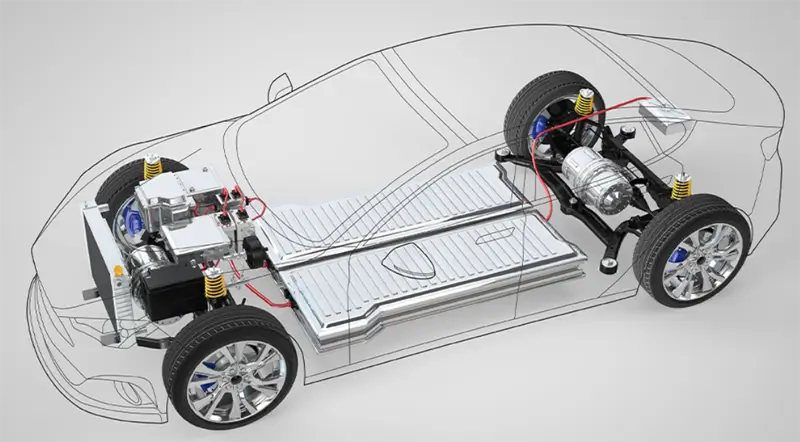
An electric vehicle’s driving characteristics depend on how energy is converted into motion and managed across the vehicle. An electric vehicle powertrain brings together motors, inverters, reduction gears, control software, and thermal systems, making integration central to vehicle design. Long-term performance is shaped by early decisions about layout, interfaces, and service. An installation becomes easier to manage when its technical limits, maintenance duties, and upgrade path are understood by everyone involved. The central design task is to connect the selected equipment with a clear site requirement.

Validate safety and fault responses
High-voltage systems require coordinated insulation monitoring, electrical protection, crash response, thermal safeguards, and clear service isolation procedures. Fault handling should define how the vehicle responds when a sensor, inverter, battery, or generator subsystem reports an abnormal condition. Functional safety and vehicle-level validation are essential before production.
Plan maintenance before the first fault
Routine inspection, cleaning, firmware updates, component replacement, and emergency isolation all require time and access. The maintenance plan should identify who performs each task, what redundancy remains, and which spares must be held locally. A maintainable design is easier to keep reliable over its operating life. For a closer look at the solution scope, review electric vehicle powertrain and consider how its documented functions fit the site layout, electrical interfaces, and operating plan.
Keep software and hardware changes aligned
Updates to motor control, energy management, battery software, or generator calibration can affect the behavior of the complete system. Change control should include regression testing and traceability to the vehicle configuration. This is especially important when a platform supports several models or regional variants.
Thermal management supports consistent performance
Power electronics and electric machines generate heat under load. Cooling design must maintain suitable temperatures during sustained acceleration, climbing, high ambient conditions, and repeated operation. Oil cooling and integrated thermal paths can help manage heat in compact systems, but the complete vehicle cooling circuit and service strategy remain important. Performance should always be assessed against the actual installation conditions and the complete system boundary.
Coordinate energy management with driving conditions
The control system has to respond to battery state of charge, vehicle speed, requested torque, temperature, and available generator output. A calibration that works well in one condition may behave differently during high-speed cruising or steep climbs. Validation should therefore cover representative routes and load profiles rather than a single laboratory point. A project specification for electric vehicle powertrain should identify the applicable configuration, installation limits, commissioning checks, and service responsibilities.
Consider noise, vibration, and harshness
The driver experiences the vehicle as a whole, not as a collection of components. Generator start-up, motor operation, gear meshing, cooling pumps, and structural vibration can all affect comfort. NVH engineering should be addressed early, with testing across different engine or generator states and road conditions.
